
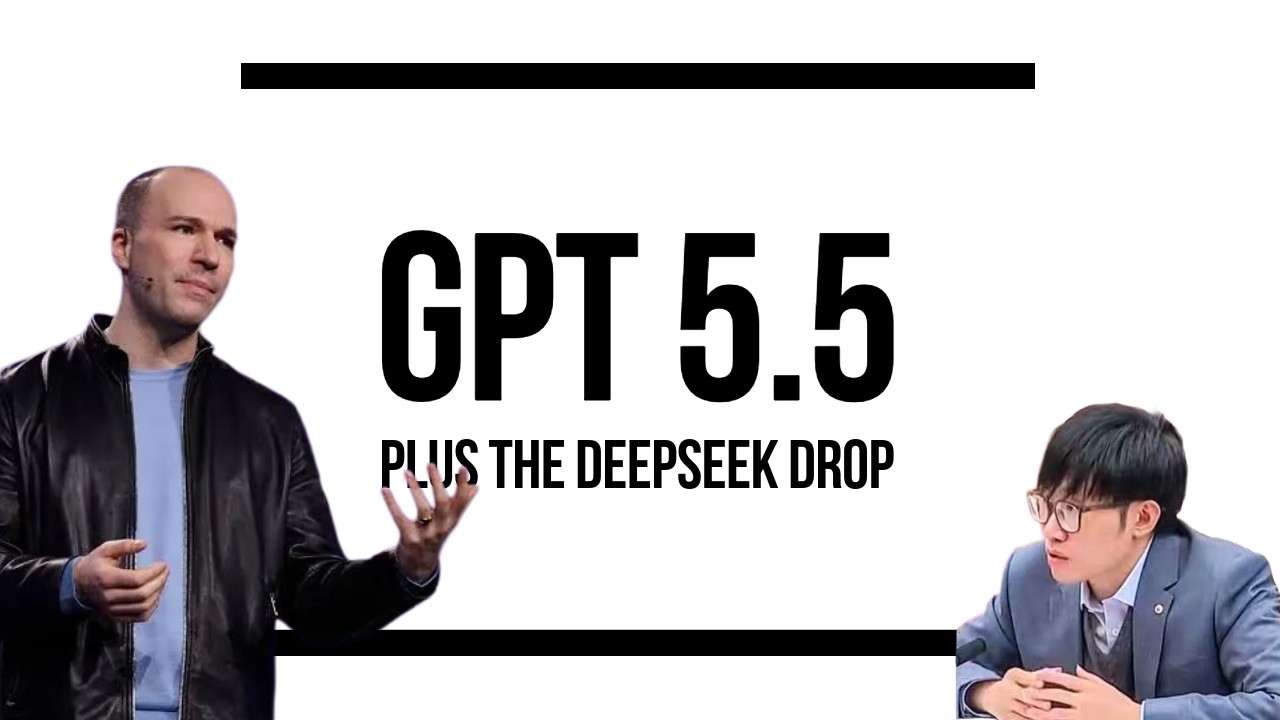
GPT 5.5 Arrives, DeepSeek V4 Drops, and the Compute War Intensifies
Flashcards, Quiz, Mind Map, Micro-Podcast, Notes & YouTube Subscriptions are Studio features.
$4.99/mo · cancel any time
Generating flashcards…
Flashcards aren't available for this video right now. This can happen with very long or non-English videos.
Tap to reveal answer
Test your understanding of this video.
Generating quiz…
Quiz isn't available for this video right now. Try a shorter video or retry in a moment.
Building mind map…
Mind map isn't available for this video right now. Try a shorter video or retry in a moment.
Overview
This video by AI Explained dives deep into recent significant developments in the AI landscape, focusing on OpenAI's GPT 5.5 and DeepSeek's V4. It aims to cut through the hype and provide concrete data points for AI enthusiasts, developers, and researchers interested in the practical capabilities and competitive dynamics of cutting-edge language models. The central argument highlights the intensifying 'compute war' and the strategic importance of benchmarking and real-world performance. The most important insight is that advancements are not just about theoretical leaps but about the incremental, yet substantial, gains in specific applications like coding and general reasoning, driven by intense competition and resource allocation.
Key Takeaways
- → OpenAI has released GPT 5.5, presented not as a revolutionary leap but as a significant incremental improvement over GPT 4.5, particularly in areas like reasoning and coding, aiming for higher reliability and performance. [0:00]
- → GPT 5.5's system card indicates a focus on safety and responsible deployment, with specific attention to preventing harmful outputs and ensuring controllability, reflecting a mature approach to AI development. [1:11]
- → DeepSeek has launched V4, a powerful open-source model that is showing competitive performance against leading proprietary models, demonstrating the rapid progress and democratization of advanced AI capabilities. [6:04]
- → The release of DeepSeek V4, especially its Pro version, challenges the dominance of closed models by offering high-tier performance, potentially democratizing access to advanced AI tools for researchers and developers worldwide. [11:50]
- → The video critically examines marketing claims, particularly surrounding 'Mythos,' suggesting a need to scrutinize how AI capabilities are presented to the public and to distinguish genuine advancements from promotional narratives. [14:11]
- → A novel 'VibeCode' experiment using GPT Image 2 to generate code based on vibe prompts highlights creative applications of multimodal AI, showcasing the potential for intuitive human-AI interaction in development. [18:03]
- → The concept of recursive self-improvement in AI is touched upon, with discussions hinting at the potential for models to accelerate their own development, a topic of significant theoretical and practical interest. [21:44]
- → The 'compute war' is intensifying, with companies fiercely competing for AI hardware and computational resources, as these are the fundamental enablers of training and deploying increasingly sophisticated AI models.
- → Benchmarks like SWE Bench Pro and AA Omniscience are presented as crucial tools for objectively evaluating model performance, moving beyond anecdotal evidence to data-driven comparisons of AI capabilities.
- → The video emphasizes that the AI industry is entering an era where scarce compute resources are a major bottleneck, meaning that efficient model architecture and training are paramount for competitive advantage.
- → Discussions around models like Claude's code limitations and ChatGPT's specific applications for clinicians illustrate the specialized strengths and weaknesses of different AI models in various professional domains.
- → The competitive landscape is evolving rapidly, with both established players like OpenAI and emerging forces like DeepSeek pushing the boundaries and challenging the status quo in AI development.
Timestamps
My Notes
Save personal notes for any video. Studio feature.
Turn this summary into audio you can listen to anywhere: commute, gym, or eyes-free.
Upgrade to Studio →Share this summary
Flashcards
What is the main…
Quiz
8 questions · Med…
Podcast
~2 min audio…
Unlock Studio tools for every summary
Flashcards, Quiz, Mind Map, Podcast, Notes | $4.99/mo, cancel anytime.
Try Studio →🤖 This summary was generated by AI and may contain inaccuracies. Always verify important information from the original video.
Writing your post…
We couldn't generate your post right now.
People also summarized
Browse Ai Machine Learning →
YouTube Video
This video addresses the pervasive issue of AI-generated "slop" in the realm of "vibe coding," where applicati…
YouTube Video
This Y Combinator Startup School video, featuring YC Partner Diana Hu, explores the paradigm shift in company …

YouTube Video
This video by Suno Zone + AIs provides a comprehensive guide to advanced techniques for using Suno AI to gener…

YouTube Video
This video from Nurtured First serves as a comprehensive guide for parents navigating the increasingly complex…

YouTube Video
This video from the "Species | Documenting AGI" channel, presented by Drew, explores a deeply concerning incid…
YouTube Video
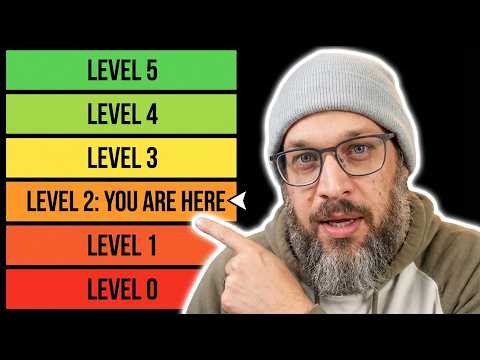
This video by Nate B. Jones explores the concept of "AI coding" and breaks it down into five distinct levels, …
LinkedIn doesn't support pre-filled text. Copy it, then paste when LinkedIn opens.
Facebook doesn't support pre-filled text. Copy it, then paste when Facebook opens.