
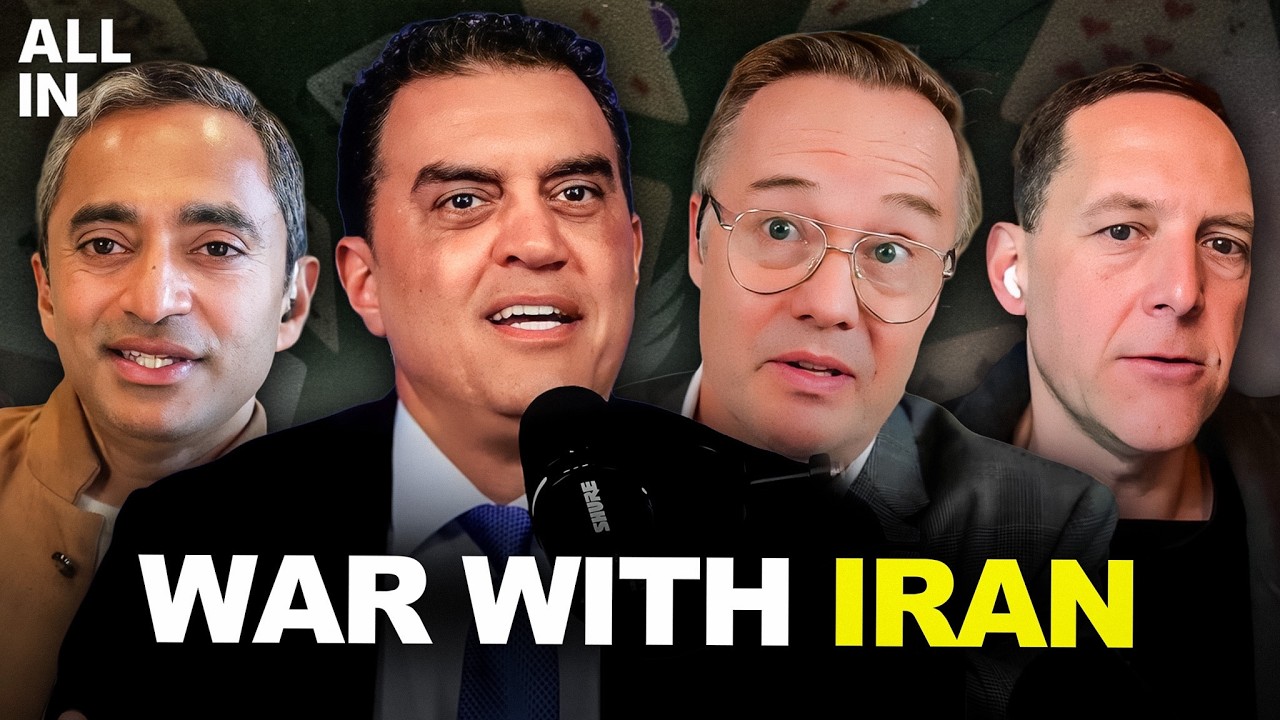
War with Iran + Pentagon vs Anthropic with Under Secretary of War Emil Michael
Flashcards, Quiz, Mind Map, Micro-Podcast, Notes & YouTube Subscriptions are Studio features.
$4.99/mo · cancel any time
Generating flashcards…
Flashcards aren't available for this video right now. This can happen with very long or non-English videos.
Tap to reveal answer
Test your understanding of this video.
Generating quiz…
Quiz isn't available for this video right now. Try a shorter video or retry in a moment.
Building mind map…
Mind map isn't available for this video right now. Try a shorter video or retry in a moment.
Overview
This All-In Podcast episode features Under Secretary of War Emil Michael discussing critical geopolitical and technological issues. The conversation delves into the potential for a US war with Iran, exploring the broader strategic context and the reasons behind its current relevance. Michael also examines Donald Trump's evolving approach to warfare, highlighting the integration of AI, drones, and shifting rules of engagement. A significant portion of the discussion focuses on the complex relationship between Israel and the US, touching upon technologies like Iron Beam. The most compelling insight revolves around the Pentagon's classification of AI company Anthropic as a supply-chain risk, underscoring the intricate interplay between national security and cutting-edge technology development. This episode is crucial for anyone interested in understanding the intersection of defense policy, international conflict, and the rapidly advancing field of artificial intelligence.
Key Takeaways
- → The possibility of a US war with Iran is presented not as an immediate certainty but as a significant strategic concern requiring careful consideration of the current geopolitical landscape and underlying drivers. Understanding the 'why now' aspect is crucial for grasping the urgency and rationale behind potential military actions. [0:00]
- → Donald Trump's approach to warfare is characterized by a willingness to adapt and integrate new technologies like AI and drones, potentially altering traditional rules of engagement. This suggests a shift towards more technologically driven and perhaps less conventional conflict strategies. [2:30]
- → Israel's relationship with the US is depicted as a key element in regional stability and defense strategy, with specific military technologies like 'Iron Beam' being highlighted as important advancements. This underscores the collaborative nature of defense efforts in certain strategic alliances. [13:16]
- → The designation of Anthropic, a prominent AI company, as a 'supply-chain risk' by the Pentagon reveals a deep-seated concern within the US defense establishment regarding the security and origin of AI technologies. This has significant implications for how the government vets and works with advanced tech firms. [28:39]
- → Valuing a company like Anthropic becomes more complicated after being labeled a supply-chain risk by the Pentagon, indicating that national security considerations can directly impact the financial and operational landscape for major tech players. This raises questions about the balance between innovation and security. [37:24]
- → The state of the US defense supply chain is presented as a critical area of focus, with discussions touching upon the broader defense tech industry, the role of organizations like DARPA, and the competitive military advancements being made by China. This highlights the ongoing arms race and the need for robust domestic defense capabilities. [41:19]
- → Emil Michael's role as Under Secretary of War provides a unique perspective on the internal discussions and strategic thinking within the Pentagon regarding complex international conflicts and technological threats. His insights offer a direct view into high-level defense policy considerations. [1:02:03]
- → The podcast's format, featuring a discussion between the 'Besties' (Chamath Palihapitiya, Jason Calacanis, David Sacks, and David Friedberg) and a high-ranking government official, allows for a deep dive into complex topics with diverse viewpoints. This interaction format is designed to elicit detailed explanations and challenges. [1:11:14]
- → The mention of Trump's 'maritime insurance play' in relation to oil prices suggests a strategic economic lever being considered or utilized in the context of international tensions, potentially impacting global energy markets. This indicates a multi-faceted approach to foreign policy and conflict resolution.
- → The feud between the Pentagon and Anthropic underscores a broader tension between the rapid pace of AI development by private companies and the government's need to ensure national security and control over critical technologies. This is a defining challenge of the current era.
Timestamps
My Notes
Save personal notes for any video. Studio feature.
Turn this summary into audio you can listen to anywhere: commute, gym, or eyes-free.
Upgrade to Studio →Share this summary
Flashcards
What is the main…
Quiz
8 questions · Med…
Podcast
~2 min audio…
Unlock Studio tools for every summary
Flashcards, Quiz, Mind Map, Podcast, Notes | $4.99/mo, cancel anytime.
Try Studio →🤖 This summary was generated by AI and may contain inaccuracies. Always verify important information from the original video.
Writing your post…
We couldn't generate your post right now.
People also summarized

YouTube Video
This video by Andrei Jikh explores the concept of 'money reprogramming,' which refers to how technological adv…

YouTube Video
This video thoroughly explores the evolving landscape of software engineering in the age of Artificial Intelli…

YouTube Video
This episode of "Lifespan with Dr. David Sinclair" delves into the critical concept of "adversity mimetics" – …
YouTube Video
This video features an insightful interview with Yoshua Bengio, often hailed as one of the 'Godfathers of AI,'…
YouTube Video
This video features Nick Freitas reacting to and dissecting a powerful speech by Senator Marco Rubio at the Mu…

YouTube Video
This video features a crucial conversation between Dr. Mark Hyman and Harvard psychiatrist Dr. Christopher Pal…
LinkedIn doesn't support pre-filled text. Copy it, then paste when LinkedIn opens.
Facebook doesn't support pre-filled text. Copy it, then paste when Facebook opens.