
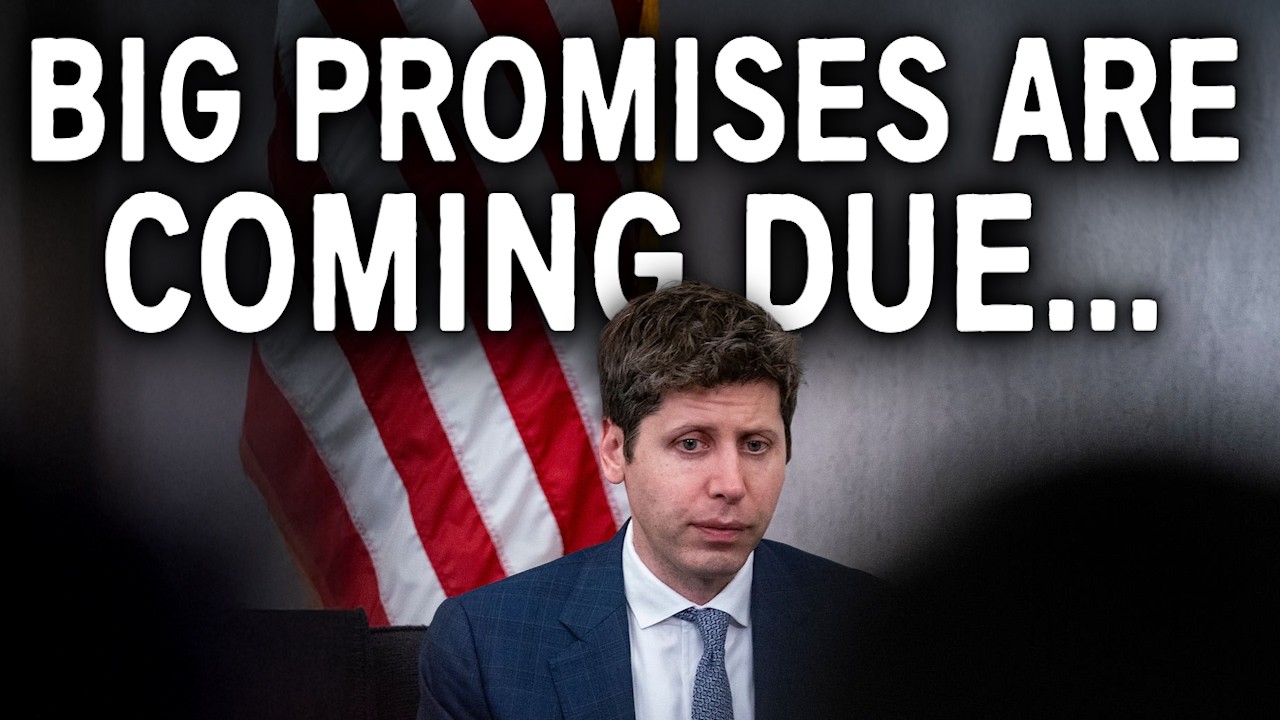
The OpenAI Problem Is About To Become OUR Problem
Flashcards, Quiz, Mind Map, Micro-Podcast, Notes & YouTube Subscriptions are Studio features.
$4.99/mo · cancel any time
Generating flashcards…
Flashcards aren't available for this video right now. This can happen with very long or non-English videos.
Tap to reveal answer
Test your understanding of this video.
Generating quiz…
Quiz isn't available for this video right now. Try a shorter video or retry in a moment.
Building mind map…
Mind map isn't available for this video right now. Try a shorter video or retry in a moment.
Overview
This video from How Money Works delves into the multifaceted "OpenAI Problem," exploring the challenges faced by the artificial intelligence company as it transitions from a non-profit to a for-profit entity. It highlights legal battles, talent departures, reputational damage due to controversial partnerships, and immense financial burn. The central argument is that OpenAI's current trajectory, fueled by massive investments and a pursuit of profit, poses significant risks that could extend beyond the company itself, potentially impacting the global stock market. The video is for anyone interested in the business and societal implications of advanced AI, the financial engineering behind tech giants, and the future of the stock market.
Key Takeaways
- → OpenAI's transformation from a non-profit focused on humanity's good to a profit-driven company aiming for a massive IPO is fraught with "teething problems." This shift raises questions about its original mission and future direction, as it navigates financial and ethical dilemmas. [0:00]
- → The company is facing a barrage of legal challenges, including disputes over intellectual property usage, governance issues, and the safe deployment of its AI tools. These legal entanglements add significant risk to its business model and public perception. [1:30]
- → Significant talent churn among its top developers is a clear indicator of internal instability and dissatisfaction, potentially hindering OpenAI's innovation and long-term growth prospects. [3:45]
- → OpenAI's willingness to engage in partnerships that some perceive as "war profiteering," such as developing AI for military applications, has drawn criticism and damaged its reputation, contradicting its initial altruistic goals. [6:00]
- → The most pressing issue is OpenAI's unsustainable financial model, burning billions monthly with trillions in future commitments and no clear revenue strategy. This financial precariousness is a major concern for its investors and future viability. [9:00]
- → Despite OpenAI's early leadership, its technological advantage is being challenged by better-funded competitors. The video questions whether the significant investments made have resulted in truly unique or replicable technology. [12:00]
- → Massive recent investments from companies like Amazon, Nvidia, and Softbank, totaling $110 billion, serve as a lifeline but also underscore the immense capital required to sustain AI development and mask underlying financial vulnerabilities.
- → The sheer valuation of OpenAI and other major AI companies in private markets presents a novel risk: their potential public listings could "break the stock market" due to their sheer size and collective weighting, creating unprecedented volatility.
- → The video suggests that the pursuit of profit over ethical considerations, exemplified by controversial applications of AI, is alienating even AI optimists and creating a disconnect with the goal of improving humanity.
- → The narrative highlights the increasing scrutiny on AI companies, not just for their technological capabilities but also for their business practices, governance, and societal impact, indicating a broader shift in how these entities are perceived and regulated.
Timestamps
My Notes
Save personal notes for any video. Studio feature.
Turn this summary into audio you can listen to anywhere: commute, gym, or eyes-free.
Upgrade to Studio →Share this summary
Flashcards
What is the main…
Quiz
8 questions · Med…
Podcast
~2 min audio…
Unlock Studio tools for every summary
Flashcards, Quiz, Mind Map, Podcast, Notes | $4.99/mo, cancel anytime.
Try Studio →🤖 This summary was generated by AI and may contain inaccuracies. Always verify important information from the original video.
Writing your post…
We couldn't generate your post right now.
People also summarized
Browse Ai Machine Learning →
YouTube Video
This video addresses the pervasive issue of AI-generated "slop" in the realm of "vibe coding," where applicati…

YouTube Video
This video from AI Explained delves into OpenAI's Sora 2, evaluating its significance beyond initial hype and …

YouTube Video
This video by Nate B. Jones explores the concept of "AI coding" and breaks it down into five distinct levels, …
YouTube Video
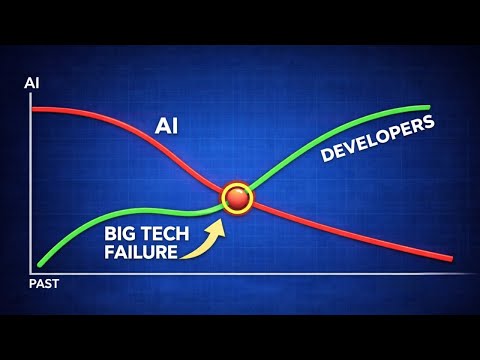
This video, hosted by Pooja Dutt, challenges the narrative that Artificial Intelligence is poised to replace s…
YouTube Video
This interview with Alex Karp, CEO of Palantir, delves into the profound implications of Artificial Intelligen…

YouTube Video
This video by Wes Roth discusses the recent release of an open-source machine learning auto-researcher by Andr…
LinkedIn doesn't support pre-filled text. Copy it, then paste when LinkedIn opens.
Facebook doesn't support pre-filled text. Copy it, then paste when Facebook opens.