
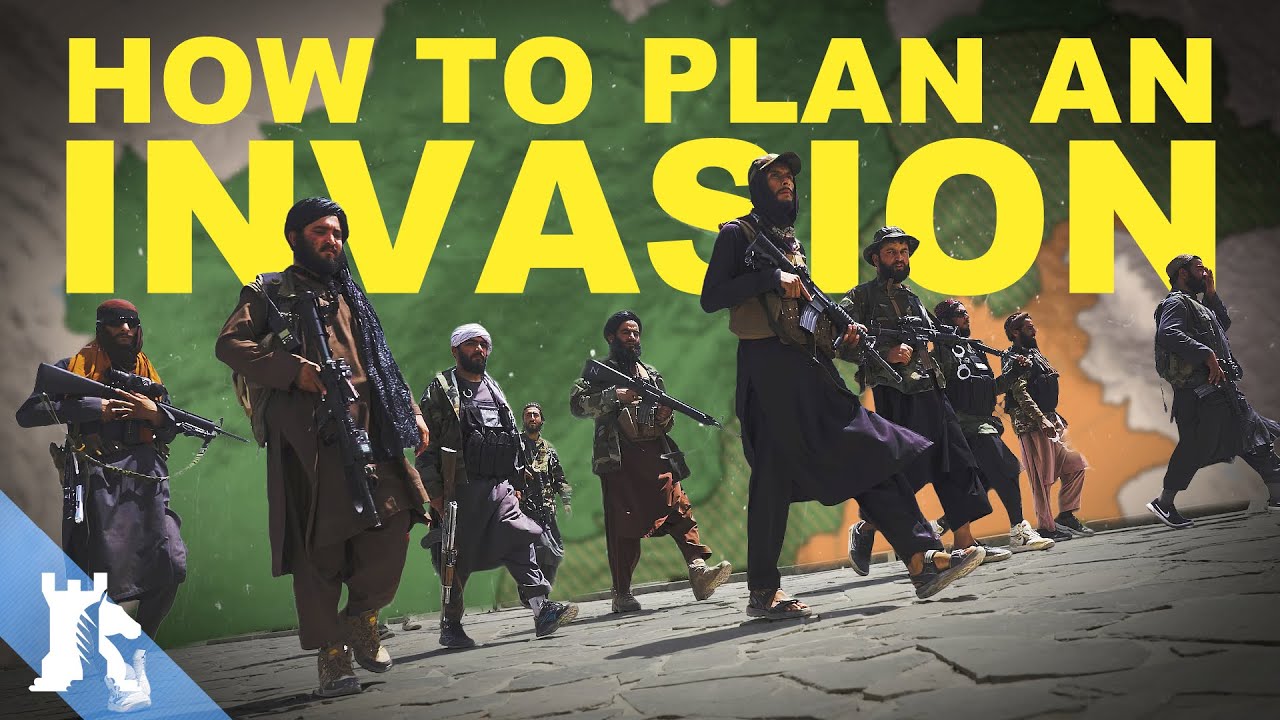
Why Afghanistan and Pakistan are fighting
Flashcards, Quiz, Mind Map, Micro-Podcast, Notes & YouTube Subscriptions are Studio features.
$4.99/mo · cancel any time
Generating flashcards…
Flashcards aren't available for this video right now. This can happen with very long or non-English videos.
Tap to reveal answer
Test your understanding of this video.
Generating quiz…
Quiz isn't available for this video right now. Try a shorter video or retry in a moment.
Building mind map…
Mind map isn't available for this video right now. Try a shorter video or retry in a moment.
Overview
This CaspianReport video delves into the escalating conflict between Afghanistan and Pakistan, specifically focusing on the disputed Durand Line border and the role of militant groups. It explains that the Taliban government views the border as an illegitimate colonial imposition, a sentiment that fuels territorial claims and recent clashes. The video highlights the TTP's agenda to destabilize Pakistan and incorporate certain regions into Afghanistan. Ultimately, it argues that this dispute, rooted in historical grievances and ethnic Pashtun aspirations, poses a significant threat to regional stability and is exacerbated by the presence of millions of Afghan refugees in Pakistan. The core insight is that the conflict is a manifestation of unresolved historical issues and ethnic irredentism, which the Taliban and TTP are actively exploiting.
Key Takeaways
- → The Taliban government officially disputes the legitimacy of the Durand Line, viewing it as a colonial-era border imposed without regard for ethnic or geographical realities. This stance is a fundamental driver of the current tensions and conflicts with Pakistan. [0:00]
- → Recent clashes along the border, involving artillery, gunfire, and air strikes, represent an escalation from sporadic attacks to open conflict, underscoring the severity of the dispute. [0:49]
- → The presence of over 2 million Afghan refugees in Pakistan, many of whom have been deported, exacerbates the instability in Afghanistan and strains relations between the two countries, potentially fueling further conflict. [1:38]
- → The Tehrik-i-Taliban Pakistan (TTP), an anti-Pakistan militant organization, operates freely within Afghanistan and is allegedly supported by the Afghan Taliban with weapons, training, and safe havens. This is a major point of contention for Pakistan. [3:31]
- → The Durand Line, drawn in 1893, divided ethnic Pashtun communities between Afghanistan and British India (later Pakistan), causing deep resentment and fueling irredentist sentiments in Afghanistan that persist to this day. [4:43]
- → The TTP's stated objective is to destabilize Pakistan and potentially annex Pashtun-majority regions, including Khyber Pakhtunkhwa and parts of Balochistan, to Afghanistan. This directly challenges Pakistan's territorial integrity. [6:14]
- → The map often associated with this claim envisions an expanded Afghanistan reaching the Indus River and the Arabian Sea, encompassing all ethnic Pashtun territories. This illustrates the maximalist territorial ambitions. [7:41]
- → A strategic motivation behind these territorial claims is the potential for Pashtun dominance within a larger Afghan political entity and the acquisition of a coastline to escape landlocked isolation. These are long-standing goals for Afghan governments. [8:02]
- → Despite the historical and ethnic arguments, the video suggests that ordinary Pashtuns in Pakistan may not wish to join Afghanistan, and similarly, Baloch ethnic groups are unlikely to seek integration with Afghanistan.
- → The conflict highlights the complex interplay of historical grievances, ethnic aspirations, and the actions of militant groups, creating a volatile geopolitical situation that transcends simple border disputes.
- → The Afghan interior ministry's explicit statement that the Durand Line was imposed by force and that the Taliban seeks to reclaim territories signifies a clear and unambiguous rejection of the current border by the ruling Afghan authority.
- → While the Afghan position on the Durand Line is understandable from an ethnic perspective, the video notes that border divisions of ethnic groups are a common feature globally, suggesting that Afghanistan's specific grievances are part of a broader historical phenomenon.
Timestamps
My Notes
Save personal notes for any video. Studio feature.
Turn this summary into audio you can listen to anywhere: commute, gym, or eyes-free.
Upgrade to Studio →Share this summary
Flashcards
What is the main…
Quiz
8 questions · Med…
Podcast
~2 min audio…
Unlock Studio tools for every summary
Flashcards, Quiz, Mind Map, Podcast, Notes | $4.99/mo, cancel anytime.
Try Studio →🤖 This summary was generated by AI and may contain inaccuracies. Always verify important information from the original video.
Writing your post…
We couldn't generate your post right now.
People also summarized

YouTube Video
This video by Andrei Jikh explores the concept of 'money reprogramming,' which refers to how technological adv…

YouTube Video
This video thoroughly explores the evolving landscape of software engineering in the age of Artificial Intelli…

YouTube Video
This episode of "Lifespan with Dr. David Sinclair" delves into the critical concept of "adversity mimetics" – …

YouTube Video
This video features an insightful interview with Yoshua Bengio, often hailed as one of the 'Godfathers of AI,'…

YouTube Video
This video features Nick Freitas reacting to and dissecting a powerful speech by Senator Marco Rubio at the Mu…

YouTube Video
This video features a crucial conversation between Dr. Mark Hyman and Harvard psychiatrist Dr. Christopher Pal…
LinkedIn doesn't support pre-filled text. Copy it, then paste when LinkedIn opens.
Facebook doesn't support pre-filled text. Copy it, then paste when Facebook opens.